Sustainable concrete paving in New Orleans isn’t just a trend; it’s becoming a practical necessity. With the city’s high water table, frequent heavy rainfall, and ongoing battle against soil subsidence, the materials and methods used for driveways, walkways, and parking areas matter more here than almost anywhere else in the country.
Homeowners and business owners across the Greater New Orleans area are increasingly asking about permeable pavers, recycled aggregate, and other eco-friendly paving solutions that reduce runoff while standing up to Louisiana’s subtropical climate.
This guide breaks down what sustainable concrete paving actually means locally, why it matters, and how to choose the right approach for your property.
Why Sustainable Paving Matters in New Orleans
New Orleans sits below sea level in many areas and relies heavily on a network of pumps and drainage canals to manage stormwater.
Traditional impermeable concrete sheds rainwater directly into the city’s drainage system, which can become overwhelmed during the heavy downpours common from June through October.
That runoff doesn’t just contribute to street flooding; it also speeds up soil compaction and contributes to the subsidence that already threatens building foundations throughout the region.
The city has responded with stormwater regulations that increasingly favor permeable surfaces, particularly for new parking lots and larger paved areas.
For property owners in New Orleans and nearby communities like Metairie and Kenner, choosing eco-conscious paving isn’t just good practice, it’s increasingly tied to local code compliance.
What Local Property Owners Are Noticing
- More frequent street flooding during routine summer storms
- Cracking and heaving in older concrete driveways due to soil movement
- City guidance encouraging permeable surfaces for new builds
- Rising interest in pervious concrete and permeable pavers for parking areas
- Concerns about long-term subsidence affecting outdoor concrete structures
- A shift toward “green infrastructure” language in local development conversations
What’s Driving the Shift Toward Eco-Friendly Concrete
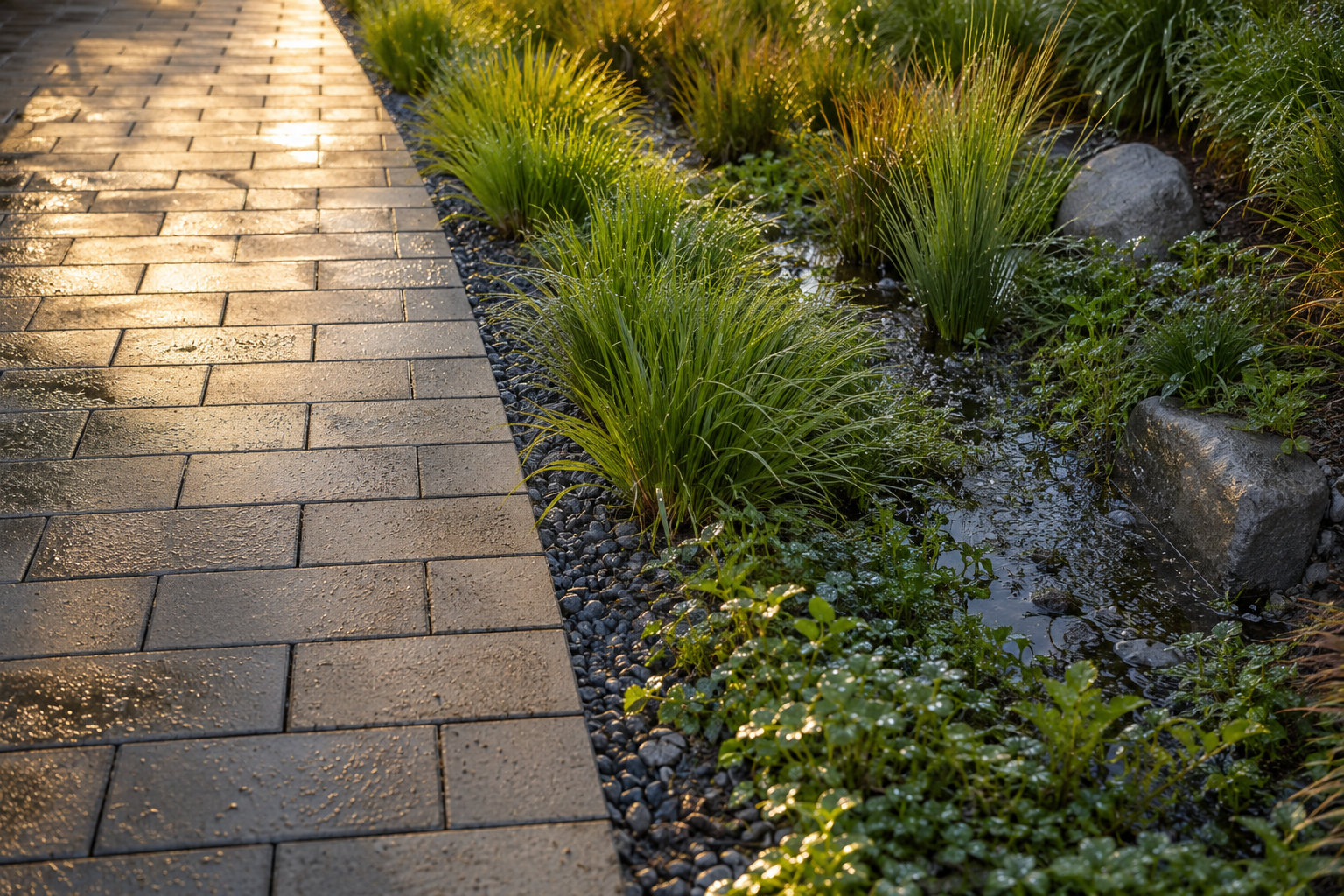 Several factors specific to the New Orleans area are pushing both residential and commercial property owners toward more sustainable concrete choices.
Understanding these factors helps explain why certain paving methods make more sense here than in drier, higher-elevation cities.
The biggest driver is water. New Orleans’ stormwater code emphasizes preserving permeable surfaces and installing stormwater best management practices that slow runoff and promote infiltration rather than letting water rush straight into the drainage network.
On top of that, the region’s soft, water-saturated soils mean traditional solid concrete slabs are more prone to settling unevenly over time, which can lead to costly repairs down the road.
Key Factors Behind the Trend
- High water table: limits how water naturally drains away from properties
- Citywide subsidence: soil compaction worsens when water can’t infiltrate naturally
- Local stormwater code: increasingly favors permeable surfaces and runoff-reducing BMPs
- Frequent heavy rainfall: standard for a typical Louisiana summer
- Heat island effect: dark, solid concrete absorbs and radiates more heat
- Rising material costs: recycled aggregate can offer a cost-effective alternative to virgin materials
Eco-Friendly Paving Solutions from Big Easy Concrete
Sustainable paving doesn’t mean sacrificing durability or curb appeal; it means choosing materials and techniques suited to the local environment.
Big Easy Concrete works with both residential and commercial clients throughout the New Orleans area to select paving approaches that balance long-term performance with environmental responsibility.
For driveways, walkways, and parking areas, permeable concrete and interlocking permeable pavers allow rainwater to filter through the surface and into the ground rather than pooling or rushing into storm drains.
For projects where full permeability isn’t required, incorporating recycled aggregate into the concrete mix reduces the need for newly quarried materials while maintaining structural integrity.
Our team also handles proper grading and drainage and detention planning so water is managed effectively across the entire property, not just at the paved surface.
What Sustainable Paving Projects Typically Include
- Permeable concrete or paver installation for driveways, patios, and walkways
- Recycled aggregate mix options for standard concrete pours
- Proper subbase preparation to support long-term infiltration
- Integrated grading and drainage planning
- Sidewalk and walkway designs that reduce surface runoff
- Site assessments to determine which areas can support permeable systems
Benefits of Sustainable Concrete Paving for NOLA Properties
Choosing eco-friendly paving in New Orleans delivers benefits that go beyond environmental responsibility. For many property owners, the practical advantages are just as compelling as the sustainability angle.
A homeowner in Slidell replacing a cracked driveway, for example, may find that a permeable paver system not only reduces standing water near the garage but also requires less frequent repair since water isn’t sitting against the slab edges after every storm.
Commercial property owners managing larger parking areas often see this as a way to stay ahead of evolving local stormwater requirements while reducing long-term maintenance costs.
Why Local Property Owners Are Making the Switch
- Reduced standing water and puddling after heavy rain
- Lower risk of water pooling against foundations
- Potential alignment with local stormwater management requirements
- Decreased heat absorption compared to traditional dark concrete
- Lower long-term maintenance from reduced water damage
- A modern, attractive finish for driveways and walkways
Thinking about a more sustainable paving option for your New Orleans property?
Big Easy Concrete can walk you through which eco-friendly paving solutions make sense for your driveway, walkway, or parking area. Reach out for a free estimate, and let’s talk through what will work best for your site.
Frequently Asked Questions
Is permeable concrete required for all paving projects in New Orleans?
Not for every project. New Orleans’ stormwater regulations generally focus on new development, larger parking areas, and certain redevelopment projects rather than every residential paving job. It’s best to confirm current requirements for your specific project with a local contractor.
Does permeable pavement hold up in Louisiana’s climate?
Yes, when properly installed with the correct subbase depth and aggregate. Permeable systems are designed to handle heavy regional rainfall, though they typically aren’t recommended for high-traffic travel lanes that bear constant heavy vehicle loads.
Is eco-friendly concrete paving more expensive than traditional concrete?
Costs vary by project, but permeable systems and recycled-aggregate mixes are often comparable to traditional concrete in total cost, especially when factoring in potential long-term savings on repairs and drainage work.
Can I add permeable paving to an existing driveway?
In many cases, yes. A full assessment of your current slab, soil conditions, and drainage needs will determine whether a permeable retrofit or full replacement makes more sense.