A cracked, sunken, or uneven sidewalk doesn’t just look bad. It’s a liability risk, a tripping hazard, and often a sign that something went wrong long before the concrete was ever poured.
Here in New Orleans, our climate adds an extra layer of challenge, with heavy rainfall, shifting soil, and intense heat cycles putting sidewalks through a lot. The good news? Most sidewalk failures are entirely preventable when you know what to look for and how to plan.
Long-lasting concrete sidewalks depend on proper site preparation, correct concrete mix, adequate joint placement, and professional installation.
Skipping any of these steps, especially in a wet, high-humidity climate like New Orleans, leads to cracking, settling, and premature failure. Getting it right the first time is always more cost-effective than repairs down the road.
Why Do Sidewalks Fail So Early?
Truth is, most sidewalk problems aren’t random. They trace back to a handful of consistent mistakes made during planning or installation. Understanding these root causes is your first line of defense.
The biggest culprit is poor subgrade preparation. If the soil beneath your concrete isn’t compacted properly, it shifts over time, and your slab goes with it.
In Louisiana, where soil tends to hold moisture and expand and contract with seasonal changes, this is especially common. Tree roots are another frequent offender, growing under slabs and pushing them upward from below.
Water also plays a major role. Improper drainage means water pools under or around your concrete, softening the base and accelerating deterioration.
And without the right concrete mix or adequate thickness, even a well-prepared surface won’t hold up under real-world conditions.
The Foundation Before the Pour: Site Preparation
Here’s the deal: what happens before the concrete is poured matters just as much as the pour itself. This is where most DIY projects and rushed jobs go wrong.
Solid site preparation includes several non-negotiable steps:
- Remove all organic material from the area, including grass, roots, and topsoil.
- Compact the subbase using gravel or crushed stone to create stable, load-bearing support.
- Grade the surface so water drains away from structures and doesn’t collect under the slab
- Check for underground utilities before breaking ground to avoid costly surprises
- Install forms correctly to ensure clean, consistent edges and proper slab thickness
Skipping any of these shortcuts leads to problems you won’t see immediately but will absolutely feel within a few years.
Getting the Mix and Thickness Right
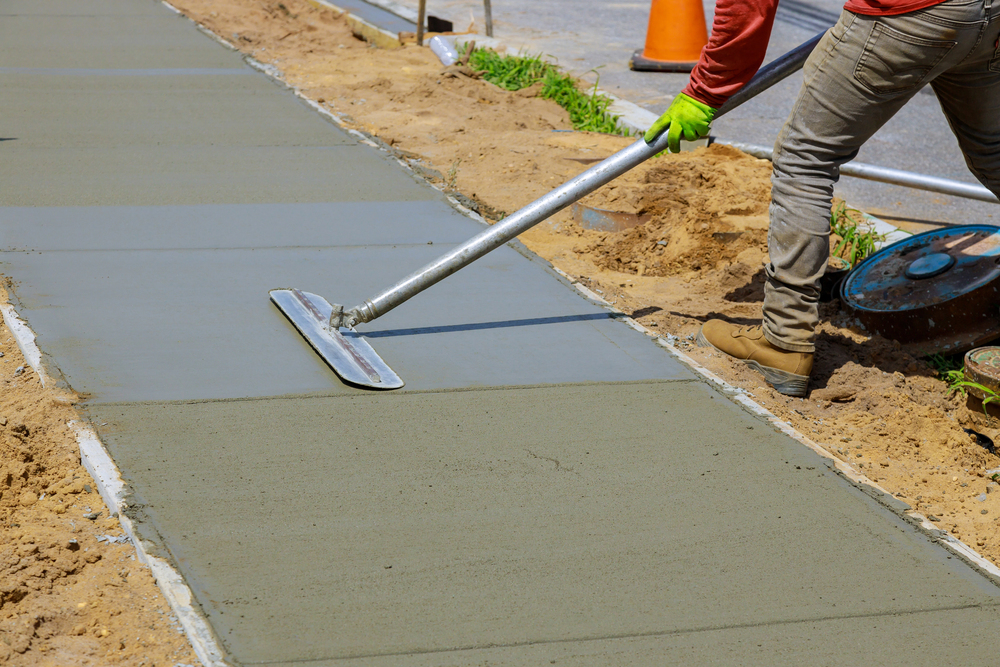 Not all concrete is created equal. For sidewalks in New Orleans, you need a mix that can handle both load-bearing stress and moisture exposure. A standard residential sidewalk should be at least 4 inches thick, while high-traffic areas or driveways bumping into walkways may warrant 5 to 6 inches.
The water-to-cement ratio in your mix directly affects strength. Too much water weakens the final slab and increases shrinkage cracking.
A quality concrete sidewalk in New Orleans should use a mix with a compressive strength of at least 3,500 PSI, strong enough to handle foot traffic, heat, and our wet season without breaking down.
Fiber reinforcement or welded wire mesh adds tensile strength and helps control cracking, especially in longer slabs or areas with ground movement risk.
Joints: The Unsung Heroes of Sidewalk Longevity
Control joints are often overlooked, but they’re one of the smartest things you can build into a sidewalk. Concrete naturally expands and contracts. Without planned joints, it cracks randomly and unpredictably.
- Control Joint: Guides cracking to a planned location recommended every 4–6 feet.
- Expansion Joint: Separates concrete from adjacent structures such as walls, posts, and curbs.
- Construction Joint: Marks the end of a pour session, placed as needed per job.
Control joints should be cut to a depth of at least one-quarter of the slab thickness. Placed correctly, they direct stress cracks to where you want them, keeping the rest of your surface clean and intact.
Curing: The Step Most Homeowners Skip
Curing is the process of keeping fresh concrete moist, so it gains strength properly. And it’s one of the most skipped steps in residential sidewalk work. When concrete dries too quickly, especially in the summer heat and wind we get in New Orleans, the surface weakens, dries, and cracks early.
Proper curing means keeping the slab damp for at least 7 days after the pour. You can do this with wet burlap, plastic sheeting, or a liquid curing compound. It sounds simple, but the difference in long-term durability is significant.
Watch for These Red Flags After Installation
Once your sidewalk is in place, keeping an eye on it early helps you catch problems before they escalate.
- Hairline cracks appearing within the first 30 days may signal a curing issue
- Uneven sections or rocking slabs point to subbase failure or erosion underneath
- Pooling water along the surface suggests improper grading
- Flaking or surface scaling often means the concrete was exposed to freeze-thaw cycles too early, or the mix was incorrect
Catching these signs early means repairs stay minor. Left alone, small problems grow into full replacements.
Build It Right with Big Easy Concrete
When you invest in a concrete sidewalk in New Orleans, you deserve a result that lasts for decades, not a few years. At Big Easy Concrete, we provide high-quality, durable, and affordable concrete services to homeowners throughout New Orleans and the surrounding areas.
We handle everything from proper subgrade prep to final curing, so you’re not left guessing whether it was done right.
Call us at 504-384-8001 for your free estimate. Anything concrete, we do it at our best.
Frequently Asked Questions About Concrete Sidewalk
How long does a concrete sidewalk typically last?
A properly installed concrete sidewalk can last 25 to 50 years with minimal maintenance. Longevity depends heavily on installation quality, soil conditions, and local climate factors.
Can I pour a sidewalk in the rain?
No. Rain can dilute the concrete mix, disrupt surface finishing, and weaken the final slab. You need dry weather during the pour and ideally for the first 24 hours of curing.
Do sidewalks require permits in New Orleans?
In many cases, yes. Replacing or adding sidewalks that connect to the public right-of-way typically requires a city permit. Always check with local authorities before starting work.
How much does sidewalk repair cost compared to replacement?
Minor crack repair can cost a fraction of full replacement. However, if the subbase has failed or damage is widespread, repair may only delay the inevitable, making full replacement more cost-effective long-term.